Editorial sample · Researched demo content, not original reporting or hands-on testing. Edit or remove this story from the CMS.
DNS: the quiet lookup that happens before a website appears
Names are for people; network addresses are for connections. DNS bridges the two.

Typing a domain name is not the same as connecting to its server. The Domain Name System, or DNS, helps turn a readable name into the addressing information a device needs. Cloudflare’s DNS overview describes the roles involved.
The resolver does the looking
Your device typically asks a recursive resolver for an answer. If it does not already have a suitable cached answer, the resolver can follow referrals through root and top-level-domain nameservers to an authoritative server holding the relevant records.
This is a distributed lookup system, not one master spreadsheet containing every website.
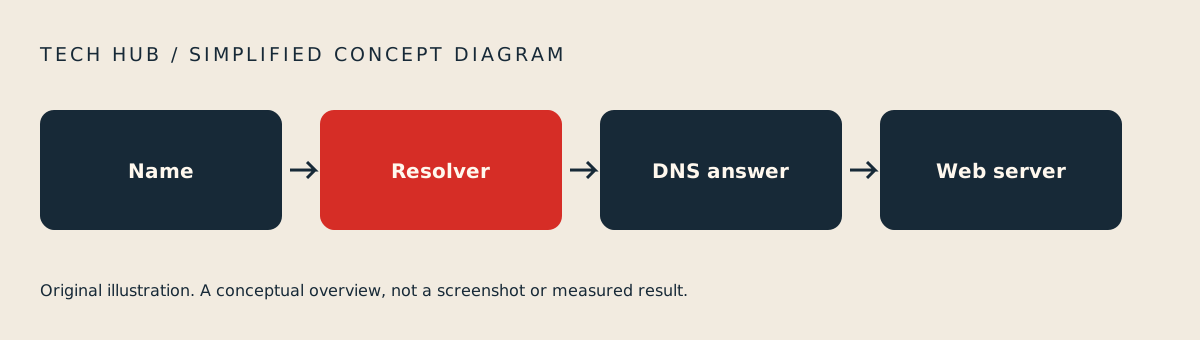
Original Tech Hub conceptual illustration; not a screenshot.
Why an old answer can persist
DNS answers can be cached. A time-to-live value limits how long an answer should be reused before another lookup. That helps explain why changing a website’s records does not necessarily make every device see the change at the same instant.
The diagram is deliberately simplified: a cached answer can skip parts of the journey, and real sites can use additional records and aliases.
A name is not the webpage
DNS helps locate a service; it does not itself deliver the page or prove the page’s claims are trustworthy. The web connection and the application behind it are separate parts of the chain.
Our useful mental model is to separate three questions: did the name resolve, could the device connect, and did the application respond correctly? “The website is down” can describe a failure at any of those steps.
What this means for readers
If one service fails while other sites work, collect the exact error before changing settings. If you manage a website, keep a record of deliberate DNS changes so a later failure can be checked against them.
This explanation does not recommend a particular DNS provider or promise that changing resolvers will repair every connectivity problem.
Editorial sample researched on 6 October 2026. Review articles are documentation-based assessments, not hands-on tests. Sources may change after that date. Original Tech Hub illustrations; no third-party news photographs.